Using AI Responsibly: Privacy, Data, and Ethics
Part 11 of 12 — Intro to AI for non-technical backgrounds
Knowing how to use AI effectively is one skill. Knowing how to use it responsibly is a second skill that matters just as much, especially if you are making decisions on behalf of an organization or working with other people's information. This lesson covers the practical privacy and ethical questions that every AI user should have clear answers to.
What data AI actually needs
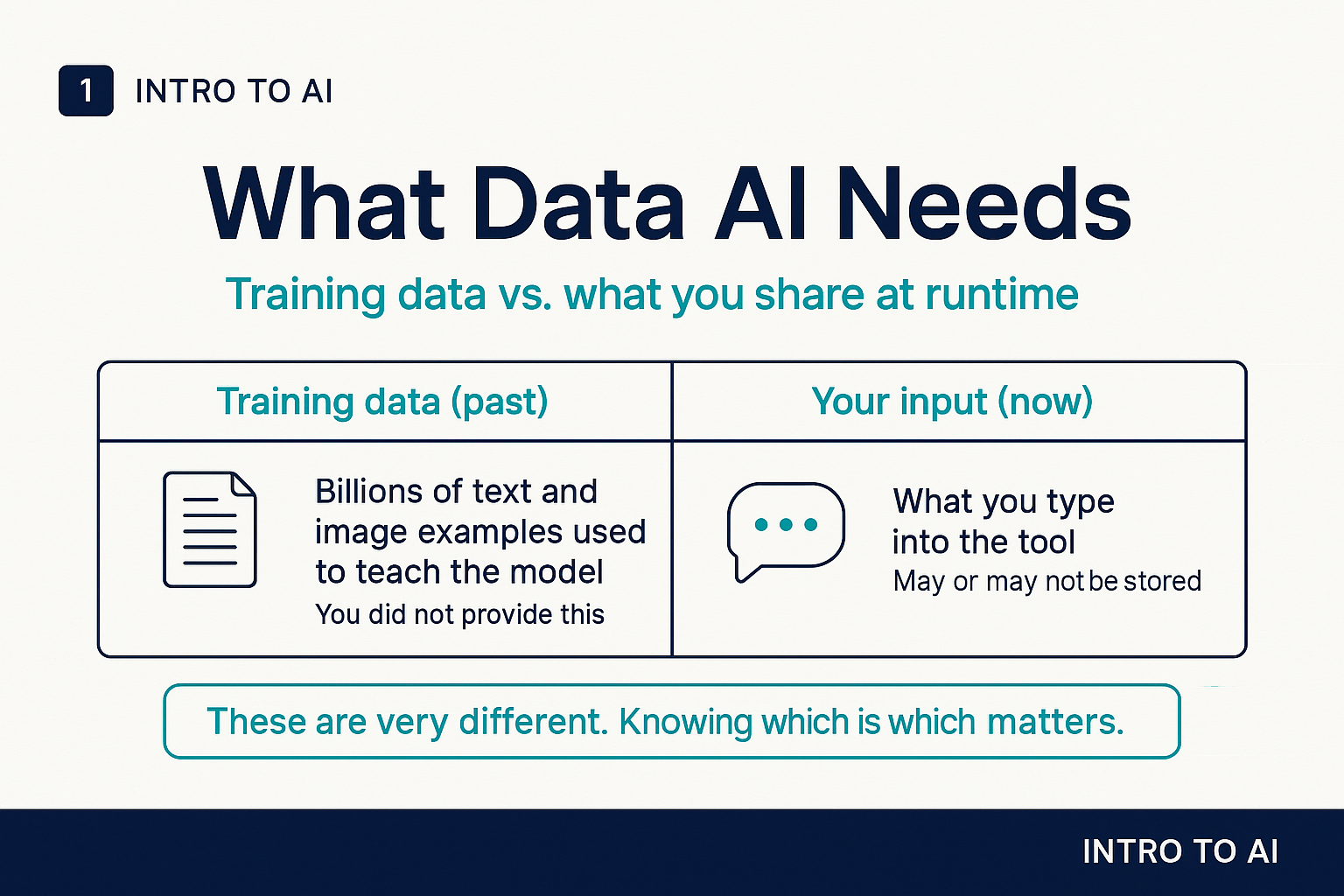
It helps to distinguish two separate moments when data is involved in AI. The first is training: the massive collection of text, images, and other content used to build the model in the first place. This happened before you ever touched the tool, and you are not contributing to it when you use a consumer product (unless the terms of service say otherwise). The second is inference: what you actually type or upload when you use the tool. These are very different from a privacy perspective, and knowing which you are thinking about changes the question you need to ask.
What happens to what you type
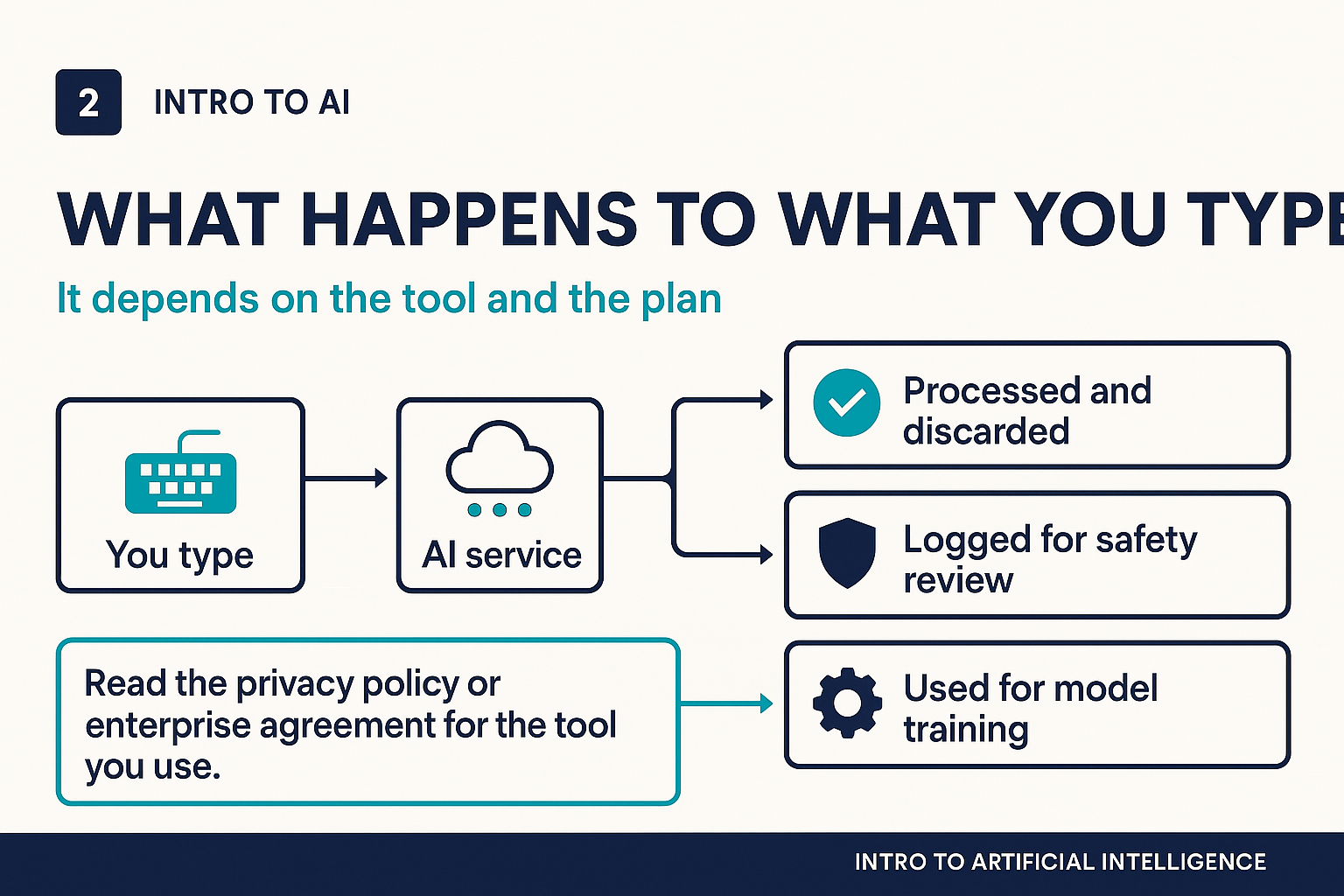
This depends entirely on the tool you are using and the plan you are on. Consumer versions of AI tools often retain your conversations, may use them to improve the model, and may be reviewed by human contractors for safety. Enterprise and team plans typically have data agreements that prohibit training on your inputs and offer stronger confidentiality protections. The privacy settings within many tools allow you to turn off conversation history, which in most cases also disables the use of your data for training.
The key habit is reading the privacy policy or data processing agreement for any tool you use with sensitive information, and adjusting settings accordingly. "I assumed it was private" is not a defense if the tool clearly stated otherwise.
Organizational risks
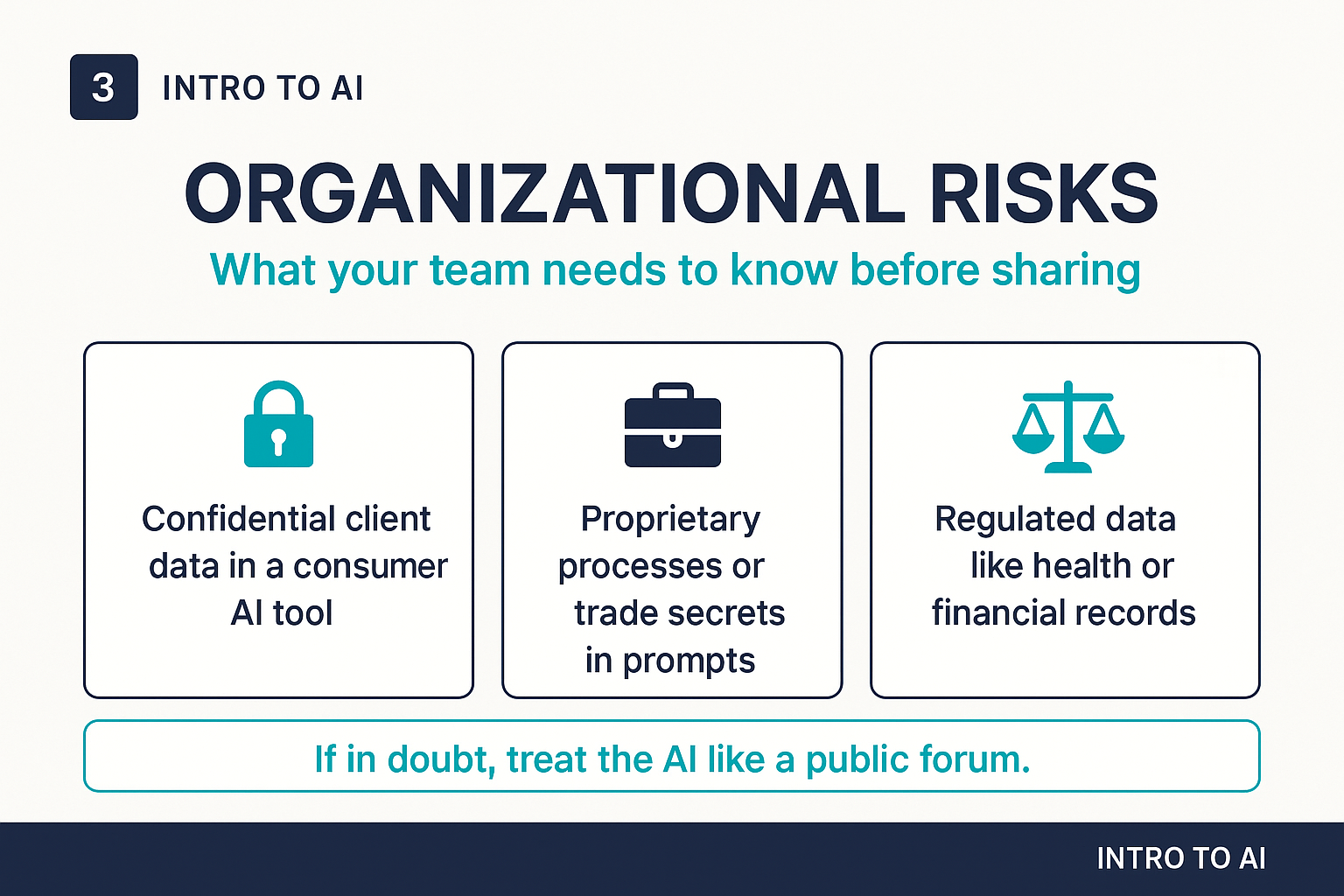
Individuals using AI tools at work create organizational risks that go beyond their own privacy preferences. The risks include:
- Confidential client information: pasting client names, contract details, or account information into a consumer AI tool may expose that information to a third-party service under terms your client never agreed to.
- Trade secrets and proprietary processes: describing internal workflows, pricing models, or product roadmaps in a public tool creates a record of that information outside your control.
- Regulated data: health records, financial data, and other categories of regulated information have specific legal requirements about how they can be processed. Most consumer AI tools are not compliant with those requirements.
The practical rule of thumb: if you would not type something into a public forum or send it in an unencrypted email, do not type it into a consumer AI tool without checking what the tool does with your data.
The ethical questions worth asking
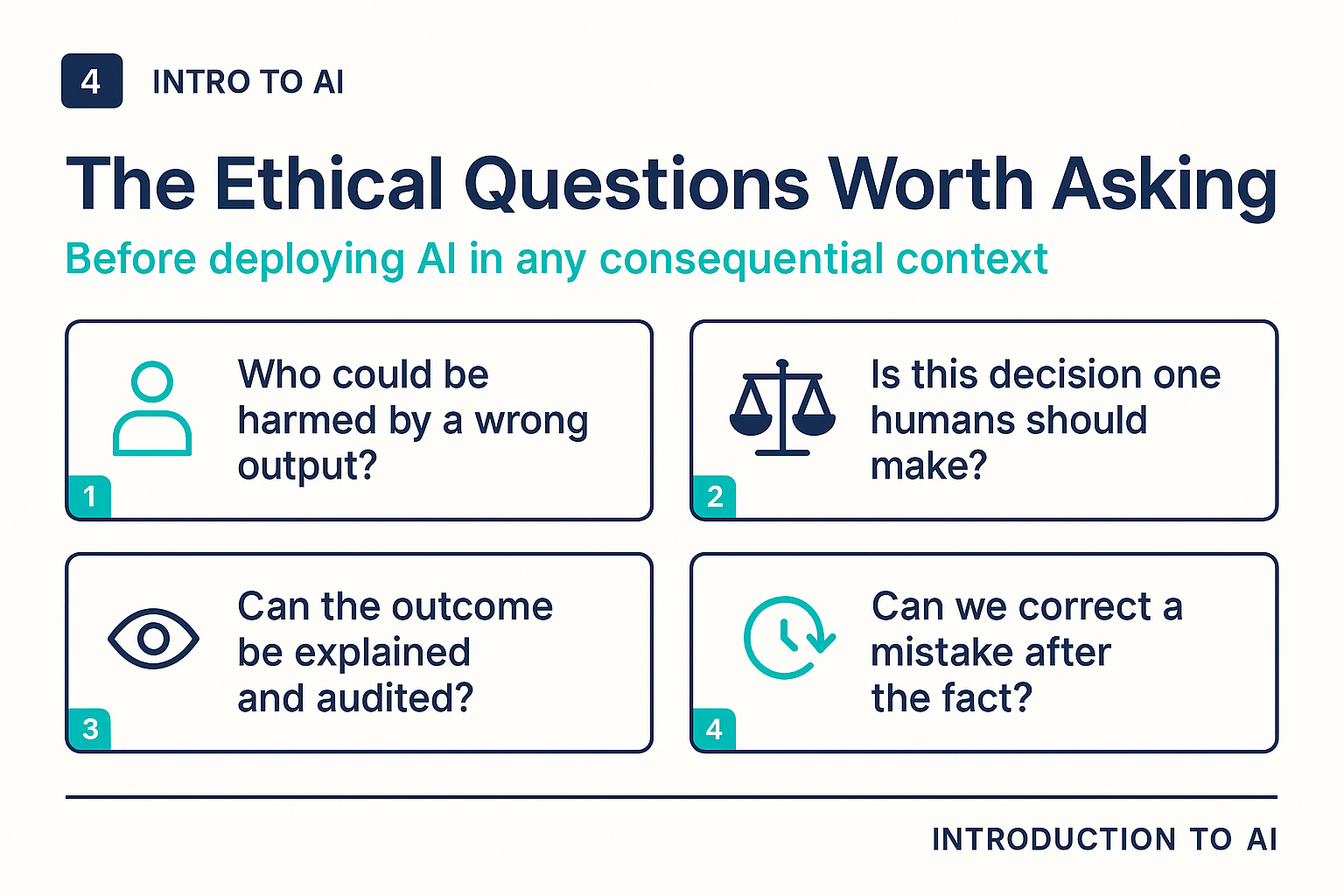
Beyond privacy, AI use raises ethical questions that matter for anyone deploying these tools in consequential contexts. The most important questions to ask before using AI in a way that affects other people are:
- Who could be harmed if the output is wrong? Errors in a document draft have different stakes than errors in a hiring decision or a medical recommendation.
- Is this a decision that humans should make? Some decisions, by their nature, require a human to be accountable for them. Automating them fully, regardless of technical capability, removes that accountability.
- Can the outcome be explained? If an AI system makes or influences a decision that significantly affects someone, can that person understand why? Explainability matters for fairness and for trust.
- Can we correct mistakes? If the AI system gets something wrong, what is the process for identifying and correcting it? Systems without feedback and correction mechanisms amplify errors over time.
The question of fairness
AI systems that affect people's opportunities, whether in hiring, lending, healthcare, or education, can perpetuate and amplify existing inequalities if they are not carefully designed and monitored. This is not hypothetical. Well-documented cases exist of AI hiring tools that discriminated against women, facial recognition systems that performed poorly on darker skin tones, and predictive policing tools that reinforced existing patterns of over-policing in certain communities.
The people best positioned to catch these problems are usually not the engineers who built the system, but the people who understand the domain and the populations affected. If you are in a position to evaluate or adopt an AI system that will make consequential decisions about people, ask specifically about how the system was tested for fairness across different groups and what monitoring is in place after deployment.
Practical privacy habits
A few simple habits cover the large majority of responsible AI use in a professional context:
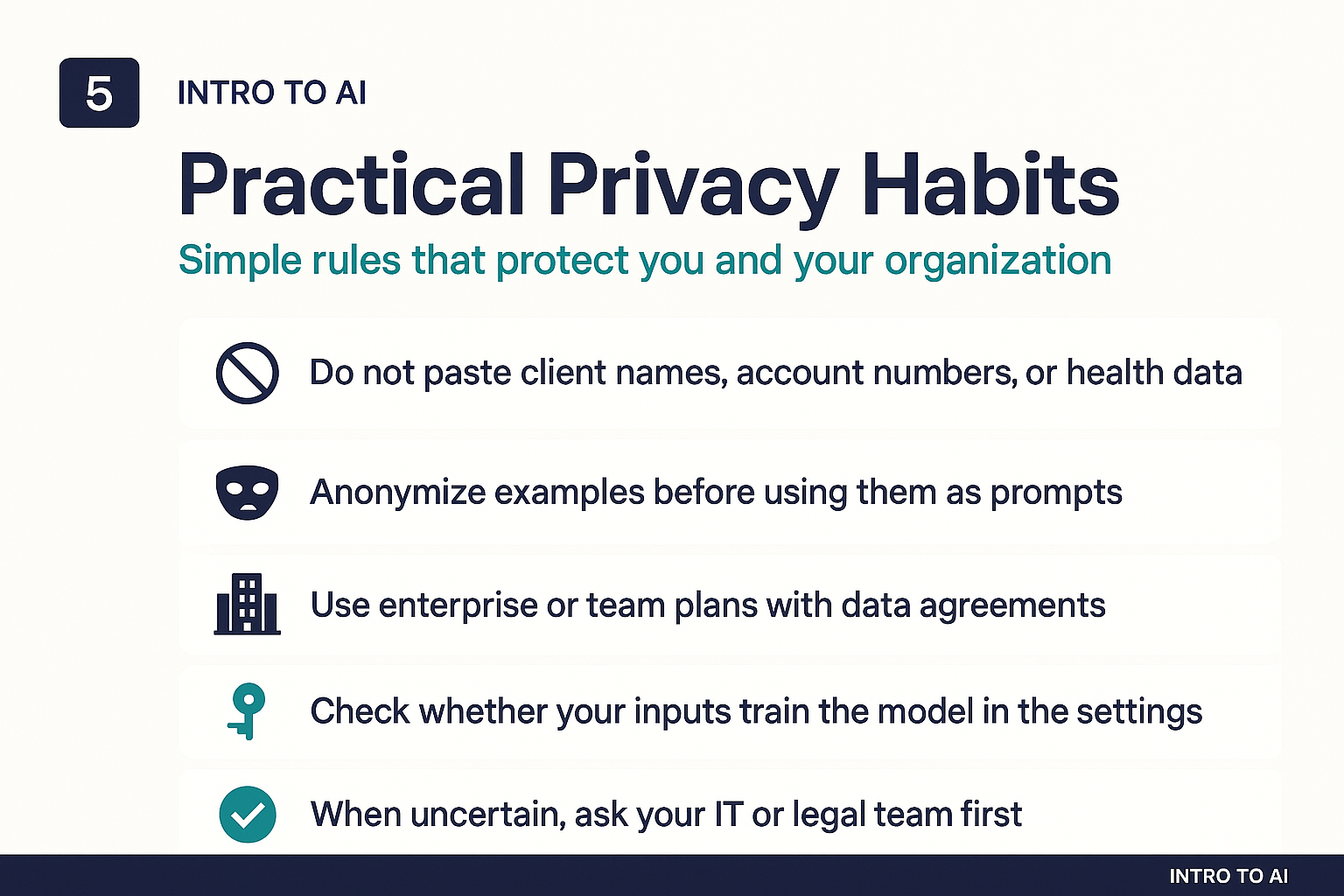
- Use enterprise or team plans for any work involving client or confidential information
- Anonymize examples before using them in prompts: replace real names and identifiers with placeholders
- Check whether your inputs are used for training in the tool's settings, and turn it off if the option exists
- Treat AI outputs involving other people's data or decisions with the same care you would treat a human employee's work product
- When uncertain about whether a particular use is appropriate, ask your legal or IT team before proceeding
Responsible AI use is not about avoiding the technology. It is about using it in ways that preserve the trust of the people who depend on your judgment.