AI Across Industries: Real-World Examples
Part 9 of 12 — Intro to AI for non-technical backgrounds
AI is not one tool for one field. The same handful of capabilities show up everywhere, dressed in the particular language and workflows of each industry. Once you see the pattern, you stop needing a separate guide for each sector. You can look at any industry and identify where AI is likely to land first and what form it will take.
Healthcare
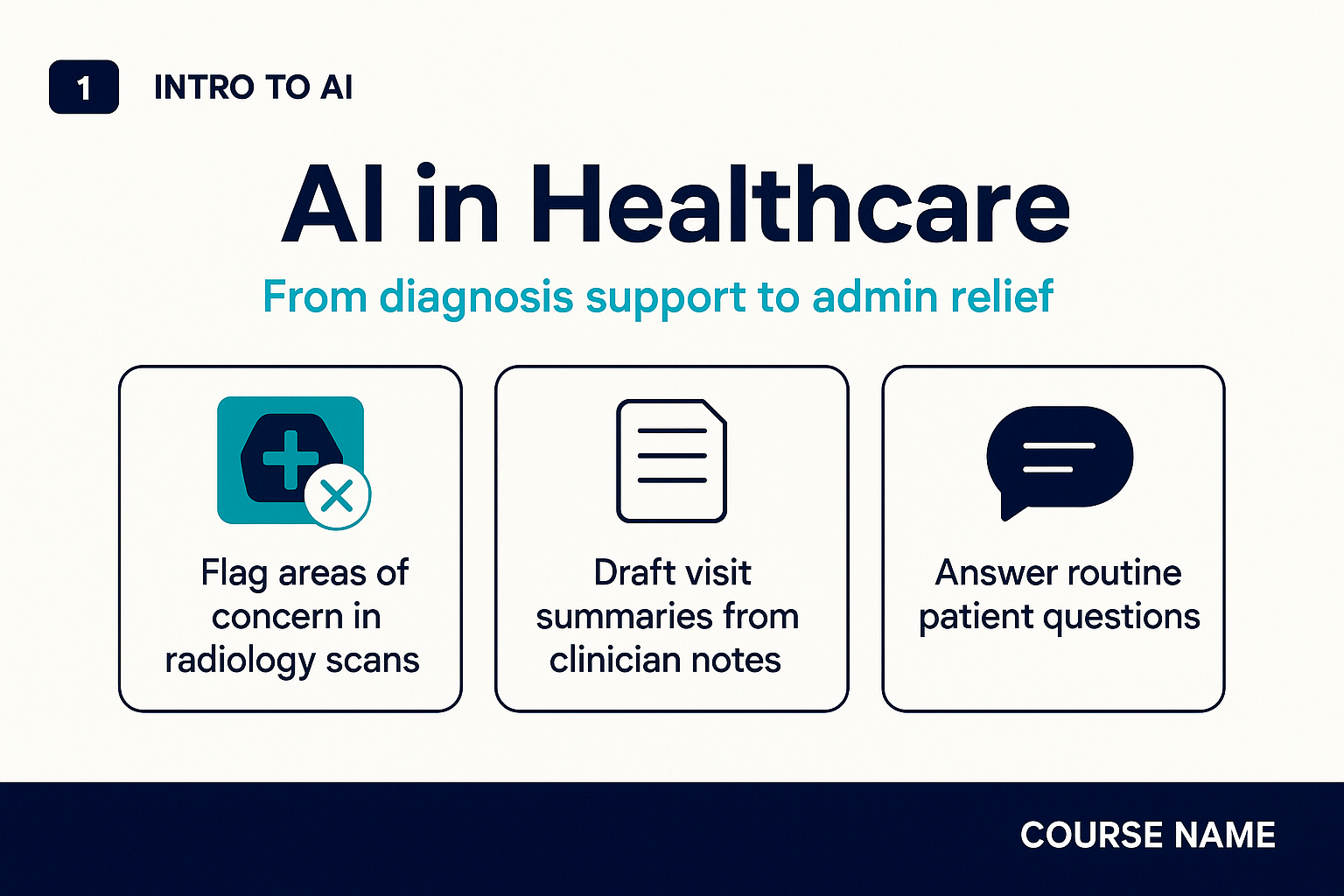
Healthcare has some of the highest-stakes applications and also some of the most impressive results. AI systems trained on medical images can flag areas of concern in radiology scans for a radiologist's closer review, catching things that might otherwise be missed in a busy clinic. Natural language systems can listen to a clinician's dictated notes after an appointment and produce a structured visit summary, saving 20 to 30 minutes of administrative work per patient. Chatbots handle routine patient questions about appointment scheduling, medication instructions, and care navigation.
The pattern here is AI handling the high-volume, pattern-rich tasks: reading thousands of similar images, processing similar note formats, answering similar questions, while human clinicians retain responsibility for the actual medical judgments and the patient relationship.
Finance and insurance
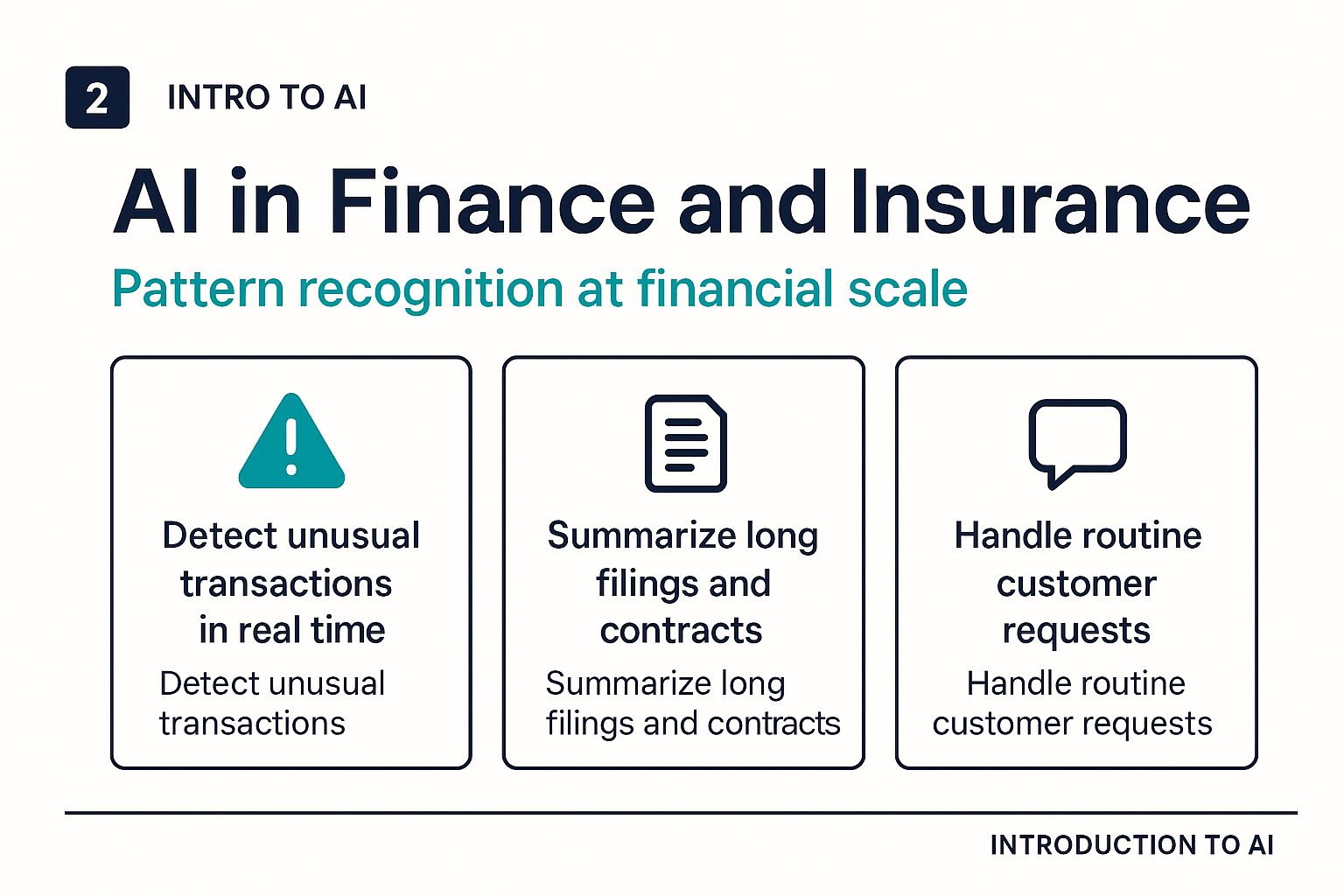
Finance has been using machine learning for fraud detection for decades: training models to recognize the patterns of legitimate transactions and flag anomalies for human review. The scale at which this works, millions of transactions per second, would be impossible with manual review. More recently, language models are being used to summarize lengthy regulatory filings and earnings calls, saving analysts hours per document. Customer-facing chatbots handle routine banking requests, freeing human agents for complex situations.
Insurance uses similar approaches for claims processing: routing straightforward claims to automated settlement and complex or potentially fraudulent ones to human adjusters. Underwriting is another area where AI helps assess risk patterns across large datasets that no individual underwriter could hold in mind.
Retail and marketing
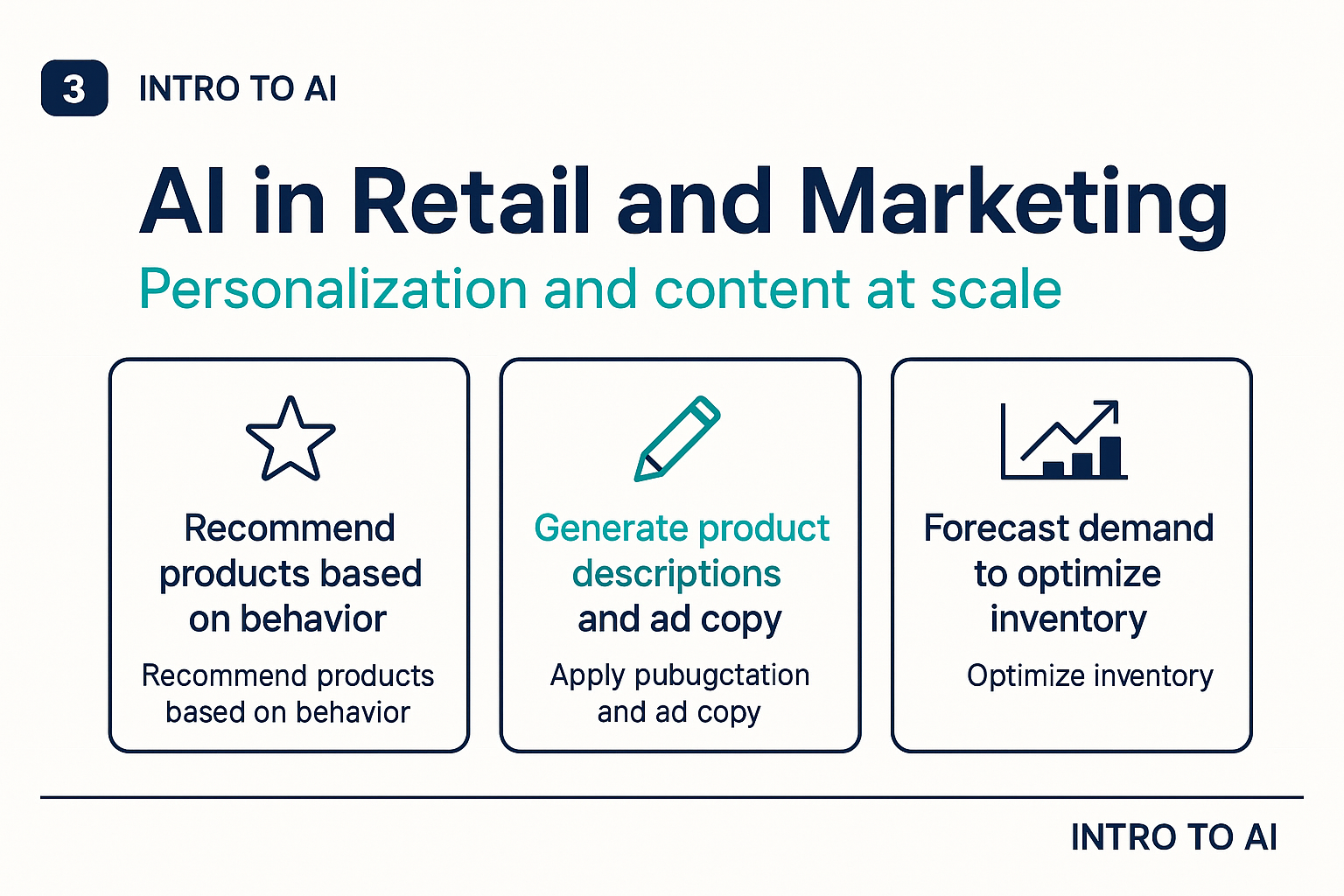
Recommendation systems, the "you might also like" and "customers who bought this also bought" features, are among the oldest and most successful commercial AI applications. They work by finding patterns in what similar customers have purchased or viewed and surfacing the most statistically likely next purchase. At scale, even small improvements in recommendation quality translate to significant revenue.
Generative AI has more recently transformed content production in retail and marketing. Product descriptions, ad copy, and email campaign variations that once required a copywriter can now be generated in seconds and then refined. Demand forecasting, predicting which products to stock and in what quantities, is another area where AI consistently outperforms traditional statistical methods.
Legal and professional services
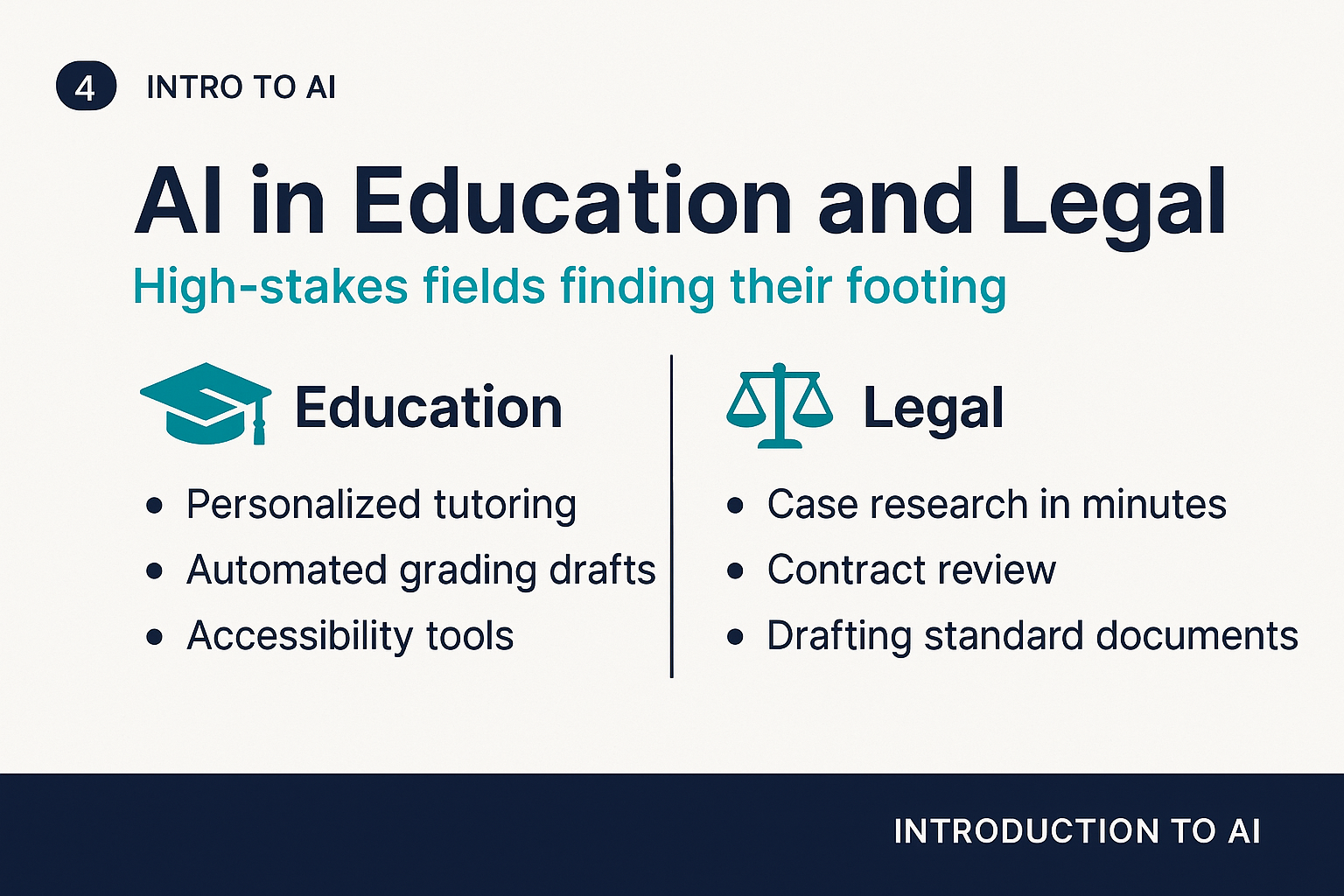
Legal work involves enormous amounts of document-intensive research: finding relevant precedents, reviewing contracts for specific clauses, and synthesizing regulatory guidance. AI tools designed for legal research can search through thousands of cases and surface the most relevant results far faster than a junior associate could. Contract review tools can flag non-standard clauses, missing provisions, or language that deviates from an agreed standard.
The more sensitive question in legal and professional services is not whether AI can help but where human professional judgment remains irreplaceable. Legal strategy, client relationships, ethical guidance, and court advocacy all require the kind of contextual, relational judgment that AI cannot replicate. The pattern is AI as a research and drafting assistant, not as a practitioner.
Education
AI tutoring systems can work through problems with students at their own pace, answering follow-up questions, offering hints, and adapting explanations to what the student already understands. This kind of personalized, responsive instruction is something that classroom teachers, managing dozens of students simultaneously, cannot easily provide at scale.
At the institutional level, AI is being used to help identify students at risk of falling behind, personalize reading recommendations, and automate the grading of objective assignments so that teachers can spend their time on the parts of their work where human judgment matters most: discussion, mentorship, and the cultivation of curiosity.
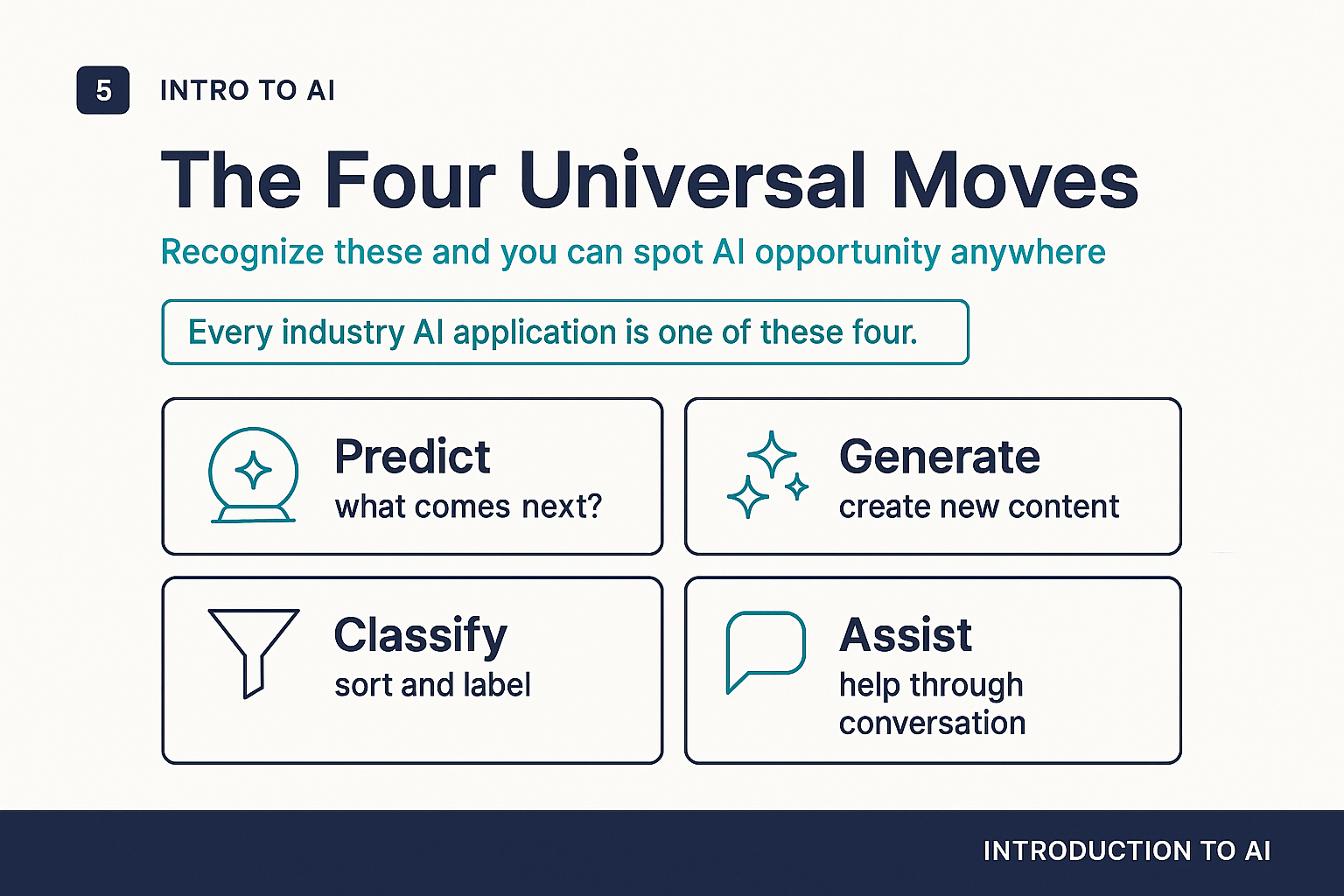
The four universal moves
Look closely at every industry example above and you will see the same four capabilities appearing in different costumes:
- Predict: what is most likely to happen next? Fraud detection, demand forecasting, at-risk student identification, clinical risk scoring.
- Generate: create new content from a prompt or context. Writing, images, summaries, code, translations.
- Classify: sort or label items. Routing customer requests, categorizing claims, tagging transactions, diagnosing images.
- Assist: help a human through a conversational interface. Customer service, patient triage, research assistance, tutoring.
This is genuinely freeing to recognize. You do not need an industry-specific AI guide for every field you encounter. You need to be able to look at any task and ask: is this a prediction problem, a generation problem, a classification problem, or an assistance problem? If it is any of those, AI has something to offer. Start there.